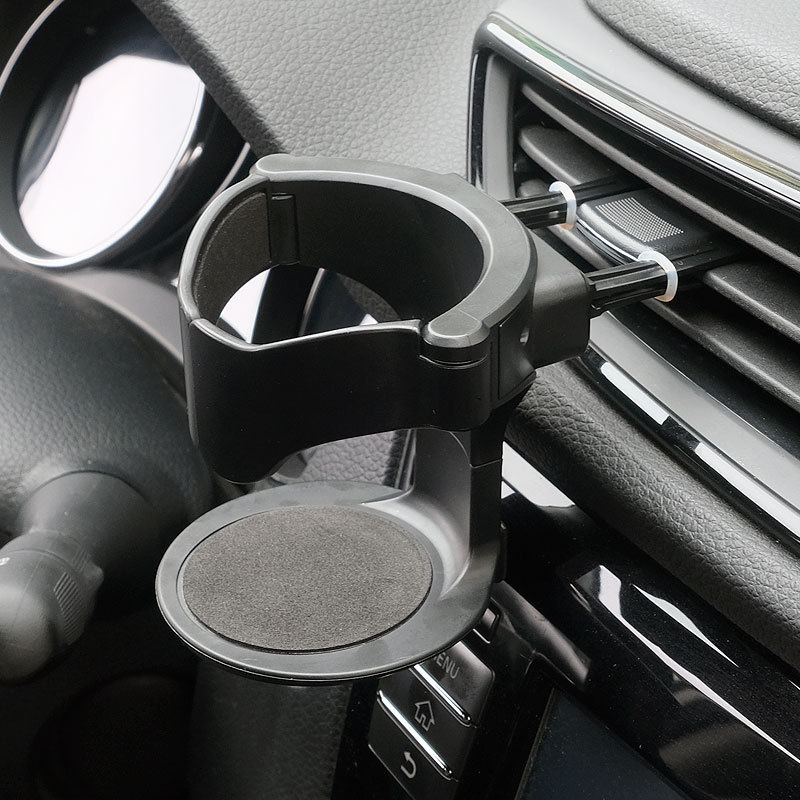
Industrial die casting parts are widely applied across automotive accessories, intelligent equipment housings, mechanical structural components and electronic hardware assemblies. Most manufacturing enterprises only focus on surface dimensional accuracy and delivery speed when purchasing castings, ignoring core hidden defects that cause frequent failures, shortened service life and frequent after-sales maintenance. These invisible problems directly raise overall production costs, damage product stability and affect long-term brand reputation of finished machinery. Choosing qualified and reliable aluminum alloy die casting components can fundamentally eliminate common production pain points and avoid repeated losses caused by unqualified casting quality.
Many low-cost die casting products suffer from internal porosity, shrinkage cavities, air holes and uneven material density. Such defects cannot be detected by simple appearance inspection, but will lead to oil leakage, air leakage, pressure resistance failure and fracture damage during long-term operation. High temperature resistance, pressure bearing performance and sealing matching degree will drop sharply, making finished equipment prone to abnormal shutdown and safety hazards. Professional customized die casting production strictly controls smelting process, mold cooling parameters and pressure injection speed, which greatly reduces internal structural defects and improves overall mechanical stability of finished parts.
Enterprises often overlook matching adaptability between die casting materials and actual working environments. Ordinary aluminum alloy materials cannot adapt to humid corrosion environments, high-frequency vibration conditions or extreme temperature difference scenarios. Long-term use will accelerate oxidation, corrosion deformation and structural fatigue. Mature casting manufacturers conduct material ratio optimization according to customer working conditions, select high-strength corrosion-resistant aluminum alloy formulas, and ensure consistent performance in complex outdoor and heavy-load industrial environments. Haohui Precision Casting adopts standardized full-process quality control system, matching exclusive material schemes for different application scenarios to extend continuous service cycle of parts.
Poor mold precision and rough post-processing will cause poor assembly fit, excessive assembly gaps and inconvenient installation and debugging. Assembly efficiency of the whole machine drops obviously, and matching clearance deviation also causes abnormal wear, noise generation and loose connection during equipment operation. Precision die casting adopts high-precision CNC mold opening, multi-dimensional dimensional polishing and secondary precision trimming, ensuring each part meets tight tolerance standards, realizes seamless assembly, and greatly improves on-site assembly efficiency of downstream production lines.
Surface treatment quality directly affects anti-rust performance, aesthetics and follow-up spraying bonding effect. Inferior die castings have loose surface structure, easy peeling paint, rust spots and poor adhesion. After long-term use, surface damage spreads inward and damages internal mechanical structure. Professional aluminum alloy die casting adopts integrated surface treatment processes including anodizing, powder spraying, passivation and electroplating, forming dense protective layers, enhancing weather resistance, wear resistance and corrosion resistance, while maintaining stable appearance quality in harsh outdoor and chemical contact environments.
Common Hidden Quality Issues & Corresponding Advantages of Standard Aluminum Alloy Die Casting
| Defect Type of Ordinary Die Castings | Negative Impact on Production | Superior Performance of High-Quality Die Castings |
|---|---|---|
| Internal porosity & air holes | Air leakage, oil leakage, pressure resistance failure | Compact internal structure, high airtightness and pressure resistance |
| Uneven material hardness | Easy deformation, fracture and short service life | Uniform material density, high tensile strength and impact resistance |
| Large dimensional tolerance | Difficult assembly, low assembly efficiency | Ultra-fine dimensional tolerance, seamless and quick assembly |
| Poor corrosion resistance | Easy rust and oxidation in humid environments | Excellent anti-corrosion, moisture resistance and high temperature resistance |
| Unstable surface adhesion | Paint peeling, falling off and ugly appearance | Firm coating adhesion, durable and beautiful surface finish |
In actual industrial production applications, die casting durability directly affects the maintenance cycle of complete equipment. Frequent replacement of vulnerable casting parts increases labor costs, logistics costs and downtime losses. Mass customized precision aluminum alloy die casting adopts standardized batch production technology, consistent batch quality, stable size parameters and unified mechanical performance, realizing long-cycle stable supply and reducing frequent replacement and debugging costs for downstream manufacturers.
Mold customization flexibility also determines whether die castings can meet personalized non-standard equipment needs. A large number of small-batch special-shaped structural parts cannot be produced by conventional casting processes, resulting in difficult matching of special mechanical accessories. Professional die casting enterprises support independent mold development, customized shape design, special thickness adjustment and special parameter customization, adapting to various non-standard mechanical structures, special-shaped housings and customized precision structural parts.
Cost control of die casting products cannot only pursue low unit price. Low-quality castings bring hidden maintenance costs, scrap loss and production delay losses, which far exceed the initial purchase price difference. Cost-effective precision die casting balances raw material quality, process precision, service life and after-sales guarantee, helping enterprises reduce comprehensive operating costs in the whole life cycle of parts. It becomes the preferred supporting casting solution for automotive, intelligent machinery, automation equipment and hardware precision industries.
Long-term stable supply capacity is an indispensable core demand for large-scale mass production. Irregular die casting suppliers have unstable production capacity, frequent delivery delays and inconsistent batch quality, disrupting the whole production schedule of finished products. Formal precision casting factories have complete production lines, mature process flow and standardized inventory scheduling, supporting large quantities of continuous orders, stable delivery cycle and unified quality standard, fully matching the mass production and long-term supporting needs of industrial manufacturing enterprises.